In high-concurrency environments, deadlocks are more than just technical glitches...they are silent performance killers. Recently, our team tackled a significant challenge on a SQL Server 2019 instance hosting a Camunda-based workflow application. The issues were primarily localized in the process timing database, specifically during critical application operations like stopping workflows.

The Anatomy of the Conflict
Our initial investigation identified the "battleground" within Camunda’s core runtime and history tables, such as ACT_HI_ACTINST (Historic Activity Instance) and ACT_RU_EXECUTION (Runtime Execution). The deadlock patterns revealed a classic struggle between UPDATE operations on history and INSERT operations into runtime tables.
The main hurdles identified:
- Data Bloat: The ACT_HI_ACTINST table had grown so large that it hindered investigation and performance.
- Maintenance Overlap: Standard maintenance jobs (SMT_IndexOptimize) were running during peak afternoon hours, competing for resources with the application.
- Indexing Gaps: Key DELETE operations, essential for cleaning up finished processes, lacked optimal index support.
The Road to Stability: A Three-Phase Approach
We didn't just apply a "quick fix." We followed a methodical tuning strategy:
Phase 1: Data Hygiene (The Cleanup) You cannot tune an engine clogged with debris. We prioritized the cleanup of the massive history tables. Once the data volume was reduced, the true patterns of the deadlocks became much clearer.
Phase 2: Orchestrating Maintenance To eliminate resource contention, we rescheduled the SMT_IndexOptimize jobs to the lowest-usage windows (01:00 AM and 03:00 AM). Furthermore, we implemented a "hard stop" at 06:00 AM to ensure that maintenance tasks never bleed into daily production traffic.
Phase 3: Targeted Indexing Analysis of the deadlock XMLs highlighted a recurring culprit:
DELETE
FROM ACT_RU_EXECUTION
WHERE ID_ = @P0
	AND REV_ = @P1
GO
The engine was struggling because no single index covered both the ID_ and REV_ columns. By creating a composite index on (ID_, REV_), we allowed the SQL Server to locate and lock rows instantly, drastically reducing the "lock-hold" time.
The Impact: Data-Driven Success
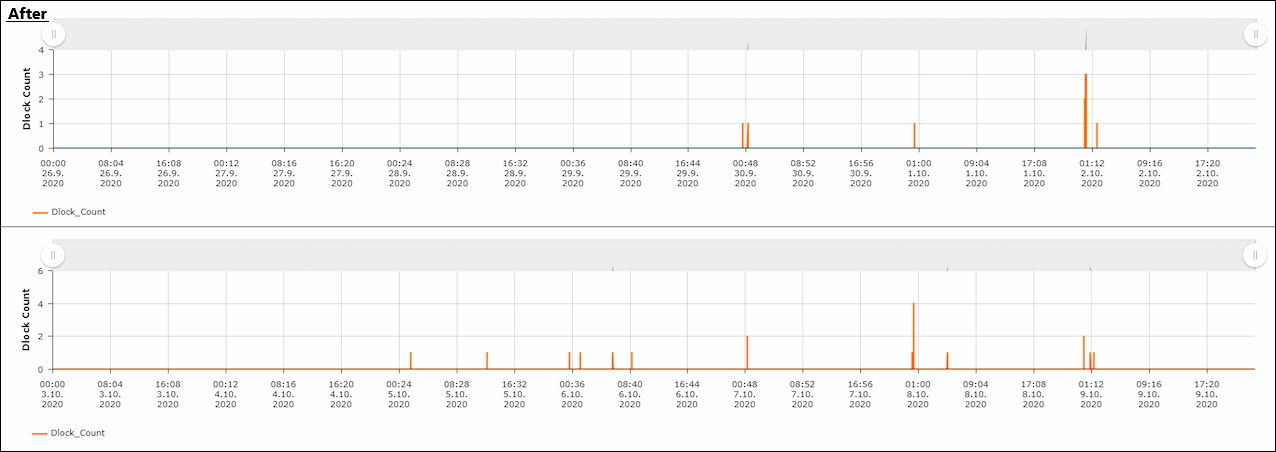
After deploying these changes and tracking them through our monitoring tools, the results were definitive. While minor deadlocks occasionally occur during intensive night maintenance, the volume of major application-level blockages has been reduced by approximately 93%.
Lessons for DBAs
Resolving deadlocks is rarely about a single "magic" query. It’s about the synergy between data volume management, smart scheduling, and precision indexing. Our next steps involve monitoring other workflow-related databases to proactively apply these lessons before issues arise.